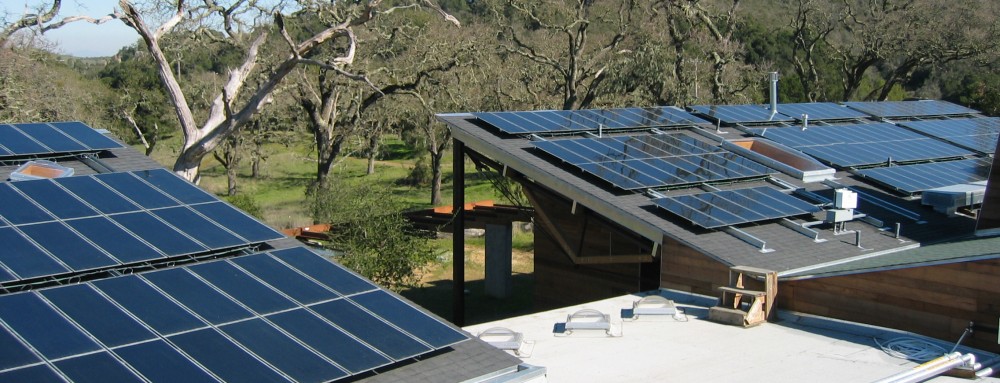
A few weeks ago I noticed that the Mitsubishi mini-split heat pumps in my house were consuming considerably more electric energy than those in my guest cottage. This applied especially to the large heat pump (15 kBtu/h) in my house living room which carries the most load.
Since then I have looked at this more closely and concluded that the excessive energy use is assocated with the fan speed settings on the heat pumps. The fans on both house heat pumps were set to Auto while the ones in the cottage were set to High (setting 4 of 5 possible manual fan speed settings). When I switched the fan mode of the house heat pumps from Auto to High their energy consumption decreased by 30-50%. That is, they supplied more heat while using less electric energy. The change was substantial.
The data that support this conclusion are convincing. The first measurements I made were to determine the heating COP for the living room heat pump. I did this 3-4 times on different days with different outside temperatures. I obtained COP numbers like 1.95, 1.15, and 1.14. This concerned me so I reached out to my installer, Dave’s Appliance. They, in turn, told me they passed my information along to Mitsubishi. In the intervening two weeks I have not heard back from either.
I don’t know why but at some point I wondered if the fan setting might be involved. Both guest cottage and house were to be unoccupied for a few days so I set the heat pumps in both to maintain an interior temperature of 60oF, 24-hours-a-day. In addition I wrote a Home Assistant automation to change the fan speed setting at midnight so that I could observe the impact of this change on energy use. I performed this experiment with the 15 kBtu/h house living room heat pump and also with the 18 kBtu/h cottage heat pump. For both heat pumps I observed similar results. The heat pumps used 40-50% less power when the fan mode was set to High as compared to when the mode was set to Auto. I also determined that the heat pump used excess power when the fan mode was set to Medium (3rd of five manual settings). I did not try any of the slower fan settings. I have confirmed similar energy savings when the fan is set to Very High (5th of five manual settings). I believe that these conclusions apply to all four of my heat pumps, though the level of savings may vary.
After I changed the living room heat pump fan speed setting to High I again measured its heating COP. This time I obtained a value of 3.7 when the outside temperature was 30oF.
I should mention that each of my four heat pumps make use of the wireless remote temperature sensor sold by Mitsubishi. It can be purchased on Amazon. In principle, this should seemlessly integrate with my heat pumps.
This seems to me to be an important result. If I were not metering (and paying attention to) my heat pump energy I would not know they are not operating efficiently. They are producing heat and the room is comfortable. Heat pump energy use is not monitored for most installations.
But energy (and associated cost and carbon) savings is the only reason to invest in heat pumps rather than inexpensive electric baseboard heaters. After all, electric base board heaters provide more stable and quieter heat and are cheaper to install. If heat pump operation does not deliver the promised savings the heating costs and carbon footprint will not meet expectations. It is quite possible that thousands of heat pump installations in New England alone are using 50% more energy than necessary because their fans are set to Auto mode. It seems to me that Mitsubishi should care.
I don’t know if this problem is related to my use of remote wireless temperature sensors, or if it also would apply even using the internal temperature sensors. (I will not be able to disconnect my remote sensors in order to test this until I return to Maine after Christmas.) It is possible that Mitsubishi software that controls the fan may be written only for the internal tempearture sensors and is not approriate when connected to a wireless temperature sensor. I have seen nothing on the Mitsubishi web site that suggests this.
I should point out that when one uses either Kumo Cloud or the remote control to change settings on the heat pumps this often changes many other heat pump parameters. For instance, if you point the remote at the heat pump and raise the temperature, the remote also sends other parameters it has saved for fan speeds, direction, etc. Someone might set the heat pump fan speed to High using the Kumo Cloud phone app, then later adjust the set temperature with the remote and inadvertently change the fan (and other) settings to those saved on the remote.
One final comment. I did find that the temperature fluctuations were smaller when the fan was in Auto mode than when the fan was set to High or Very High. So there does seem to be a tradeoff between energy savings and temperature control. Experiments continue to better quantify this.
 The Pragmatic Steward
Very interesting article and finding – thanks. I was sort of expecting this after some pondering over the (theoretical) COP heating equation, when doing a search to confirm my thinking I found your investigation.
COP = Th / (Th – Tc); temps in Kelvin, h=heater side, c=cold side
The point here is that the lower the temp difference is between heater/inside and cold/outside, the higher COP you get. The heater temp is not the room temperature but the indoor coil temp, and the faster the indoor fan runs the lower the coil temp will be (for a given energy flow) and subsequently result in a higher COP. At least that’s my interpretation, based on the theory and my observations on my heat pumps, both aligning well with your findings.
Anders thanks for your comment.
I think the equation you provided is the theoretical COP for a reversible or ideal (eg, Carnot) heat pump. Real heat pumps do not achieve COP’s nearly this high. The the theoretical equation surely captures the idea that the larger the temperature delta the lower the COP.
Curious that the systems are operating like this. The advice I’ve been told is to always use auto. Im experiencing similar efficiency gains (20% lower power draw) at max speed fan vs low speed on an 18kBtu unit but not a 12kBtu. Could it be an issue with install and the amount of refrigerant charge or just a fundamental difference in compressor size?
I wonder if you’ll ever hear from Mitsubishi….
Thank you for this article!
I have a Mitsubishi mini-split and use it mainly for cooling in summers. However, there have been 3 times I’ve used it for heat and back of the napkin (estimated COP, fairly accurate kwh used, knowing the therms I typically use for my gas boiler, etc.) has shown that in the first 2 times of use the kwh has been about two times what was expected (and up to three times in cost). Though I do not recall I’m pretty sure I had fan speed on auto or a low speed.
The local HVAC company said running in fan specific speed, not auto, is better for heat distribution and the system “works better”. Recently I used the heat again while running the fan in High and sure enough the kwh / cost was inline with expectations (finding this article shows I’m not the only one coming to this conclusion). Though not 100% my theory has also led me to believe it is the fan speed.
I wonder if in cooling mode it having fan in auto may not make a difference due to cold air falling and the mini split being mounted up high.
If you do hear back from Mitsubishi please let us know!
PS — I do *not* have the remote sensors (only indoor units using the built-in sensors)
Thanks for the comment.
Doug Tucker, Director of Industry and Govt. Relations at Mitsubishi has offered to get an engineer at Mitsubishi to look into this. I have put together documentation for him and am hopeful they will look at the data and provide an explanation — and perhaps even some modified guidance, if appropriate.
Thank you Pragmatic Steward! I have a new Mitsubishi Hyper Heat system that I am struggling with. I too have found that the mini splits in the first floor open space heat more effectively when the fan is on the highest setting as opposed to auto, in my case with negligible impact on energy consumption so far. I am using the included remote control units only at this stage, while I try to work out how to get more consistent target temperatures. I would also love to hear any response you get from Mitsubishi.
Dear John,
Thank you for sharing your findings. I have looked for the temperature determined by the heat pump’s remote wireless answer to the question which fan settings are best for several months. Peplexity sent me to this page.
I have a question though. How did you measure the COP?
Regards, Jans
Heating COP is difficult to measure. It is the ratio of the heat delivered to the electric energy used. It is easy to measure the electric energy, but difficult (except perhaps in a laboratory setting) to measure the heat delivered. (Perhaps you know a good way to determine COP — if so, would be interested in learning.)
I have indirectly determined the COP on a couple of occasions. I run the heat pump for, say 2 hours to maintain a certain inside temperature. Then I shut off the heat pump and run some portable electric heaters to achieve the same inside temperature for 2 hours. I also measure the outside temperature during this time. The assumption is that the heat delivered by the electric heaters must be the same as what was delivered by the heat pump for the earlier time. With this assumption the heating COP is the ratio of the electric energy used by the electric heaters divided by the electric energy used by the heat pump.
If the outside temperature changes during the experiment (which it inevitably does) then I make a linear correction based on the average outside temperature during the two time intervals.
On the 2-3 times that I performed this experiment I found that the heating COP was higher when the fan was set to highest speed than what it was when the fan was set to Auto. I have to look back at my notes, but I think the COP’s were something like 3 for highest fan speed and 2 for auto. But, I would need to find my notes to get this quantitatively right.
I just went back and re-read my 2023-12-11 post and there I provide some specific COP numbers that I determined. They are consistent with my memory.
Thanks for your shared research! Did you ever determine whether high(4) or very high(5) was a more efficient setting? I have Jim B’s issue with 2 Mitsubishi hyperheat units not keeping up at night. I just changed the Kumo Cloud programmed settings from auto to high and hope for both better efficiency and better heating.
I did not do measurements to determine if there is any difference in efficiency between the high and very high fan settings. I expect it has to do mostly with room size. In my den (12 x 12 room) with a 6kBtu/h unit I believe (but am not certain) that the high fan speed is adequate to circulate the heat out of the evaporator unit. I tend to leave the fan set on very high during the night (when sound does not matter) and then turn it down to the high (4) setting when I am working there. For the bedrooms I tend to leave them on high through the night then switch to very high during the day when the bedroom is unoccupied. (I leave unit is directed to blow air down to the floor towards the door that I leave open so the warm air reaches the rest of the house.)
In our living room/dining area where the single 18kBtu/h unit provides heat to a very open space I leave the fan on the very high setting most the time. In the evening when sitting there I might set it back to high to quiet the noise — but return to very high when we go to bed.
All of these changes are made using Home Assistant or the Kumo Cloud app. We rarely use the remotes. I have found using the remote to be problematic in that it frequently changes many more settings on the units than the single one I was hoping to change. For instance, you might want to raise the temperature a couple of degrees and use the remote to do that, not realizing that the fan, and other settings stored on the remote are different from what you want. I only use the remote when I want to change a setting that cannot be changed with the Kumo App or Home Assistant.
I have looked for the answer to the question which fan settings are best for several months.
Thanks for the answer. I don’t know an easy way to measure the COP, that’s why I asked 🙂
Did you ever hear back from Mitsubishi? I have a similar issue, but for me, in auto fan speed when cold outside <30F the indoor temp will fall below the set point by over 3 degrees. If I bump it to high fan speed, it will catch up and maintain set point (typically 68F). Similar issues when cooling at higher outside temps.
No, Mitsubishi seems to have no interest whatsoever in addressing my problem. I bugged their regional representative down in Falmouth and a professional friend of mine pushed for help through a VP he knows at Mitsubishi. A few emails went back and forth saying that he (the VP) had handed it off to engineering — but no one ever got back with me.
thanks for this, i will give it a try with my panasonics which otherwise performs absolutely fabulous for over5 yearsnow
thank you very much for your info! I immediately checked on my three Panasonics, they were all on high Fan speed and thus not on auto. Possible one of the reason wny I have such a good SCOP.
does anybody have experienced info on how the outside ventilators are positioned? I mean mostly relatively close to the wall of the house,but what about optimal air flow?
I will be trying this. We installed Mistubishi heat pumps as our main heating source and have had extremely high electric bills, over $1000 in Vermont! We have tried troubleshooting and talking to power and efficiency companies who agree our usage is quite high. We have tried auto settings, timed settings, turning off at night and keeping the heat extremely low but have seen little change in consumption. But we had not considered the fan speed. Hopefully, this will help them run more efficiently. I want to use cleaner energy but the cost for five months in winter is hard to afford.
Thank you, Laura White
Thanks for the helpful info and inspiration! Prompted by your data, I plan to install an Emporia Vue system this weekend to do some of my own testing. I have outdoors a 3 ton MXZ-3C30NAHZ. H2i Hyper Heat with both an MSZ-FS18NA and -12NA in walls of a large open high-ceiing living area (open to the hall and upstairs). They are connected to Kumo Cloud and track two PAC-USWHS003-TH-1 wireless thermostats that sit side-by-side across the room (so both units always work in tandem). As they heat the whole house, they struggle some during the coldest winter night hours at 7k feet in CO. (An unconnected, -6NA unit in the upstairs bedroom is only turned on manually w the coldest nights). I also have a Govee thermometer that tracks the actual indoor temp. I will let you know if I find interesting data.
Cheers!
I’ll be curious to see what you learn. Keep us posted.
I’m losing my mind with understanding my heat pump. I have a whole home Zuba unit in -20celcius in Canada. I have a bypass humidifier connected to my Zuba and there is a service configuration option that when the bypass humidifer is calling for water, it forces the Zuba to go into HIGH fan speed, regardless of my setting. I can change this but I don’t understand the implication.
I’m trying to come to terms with what “low” fan speed vs “high” fan speed does.
In my mind, setting the fan speed to “low” is cheaper, it is the first time I see on my Mitsubishi PAR40 unit “Heat Standby” as opposed to “Heat” or “Heat Defrost”
To me I interpret standby as “enough heat is in the system, letting the fan distribute it” – but maybe that is just my imagination..
I just wish there was a straight forward scenario of:
Set fan speed low WHEN…..
Set fan speed auto WHEN….
Set fan speed high WHEN…..
Until then I continue to fanangle this mysterious beast….
I don’t pretend to understand heat pumps, in general. My experience is just with the Mitsubishi mini-splits. For these the owner can control the speed of the fan that circulates air through the condenser coils (inside unit). There are about 5 different settings for this fan. In my experience using an external wireless temperature sensor for temperature control, the unit uses excessive energy if I set the fan speed to low or Auto. If uses less energy if I set the fan speed to one of the highest two settings (high or very high). This is my personal experience with this very specific unit and my situation.